

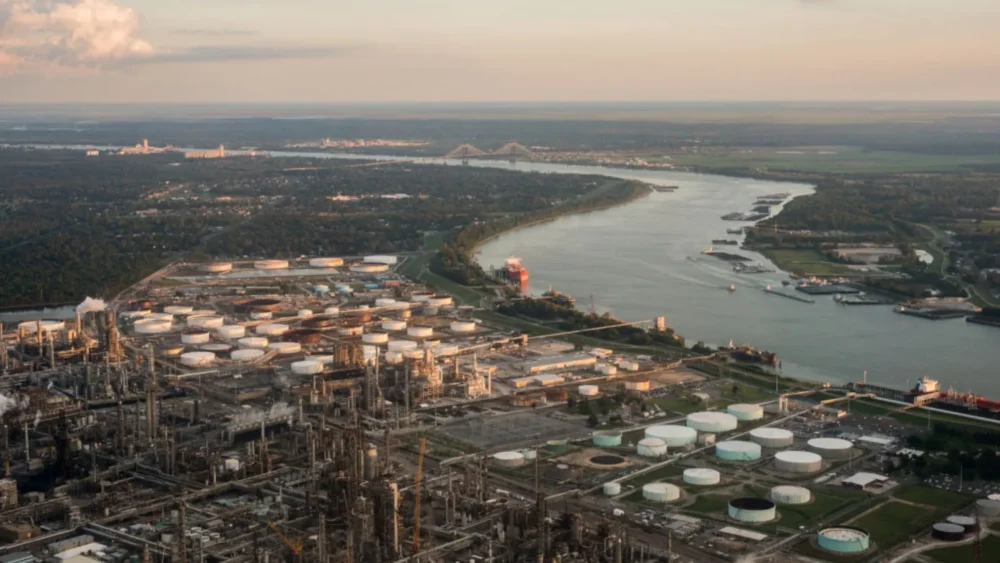
When people ask why Cancer Alley is considered dangerous, they are usually referring to a long stretch of industrial development along the Mississippi River between Baton Rouge and New Orleans.
The short answer is this:
Cancer Alley is considered dangerous because some Louisiana communities are located near one of the highest concentrations of petrochemical facilities in the United States, exposing residents to a mixture of industrial pollutants linked to cancer concerns, respiratory illness, and long-term environmental contamination.
However, the issue is more complicated than headlines sometimes suggest.
Not every community experiences the same risks. Not every facility releases the same pollutants. And proving whether long-term industrial exposure directly caused illness is often difficult.
Still, decades of emissions reporting, environmental monitoring, scientific studies, and litigation have raised serious questions about how industrial pollution may affect nearby residents.
What Makes Cancer Alley Different?
Louisiana is home to one of the country’s largest concentrations of refineries, petrochemical facilities, and industrial manufacturing plants.
In many parts of Cancer Alley, residential neighborhoods exist near:
- oil refineries
- plastics manufacturing plants
- chemical production facilities
- fertilizer plants
- fuel storage operations
This concentration matters because communities may be exposed to multiple industrial pollutants at once, sometimes over many years.
Unlike a single factory town, Cancer Alley often involves overlapping emissions sources within the same geographic area.
Residents in parishes such as St. James, St. John the Baptist, Ascension, Iberville, and St. Charles may live near several industrial operations simultaneously.
If you are unfamiliar with the chemicals most commonly discussed in the region, our guide to chemicals found in Cancer Alley breaks down the major pollutants and where they come from.
The Problem of Cumulative Exposure
One reason Cancer Alley receives so much attention is because concerns rarely involve a single chemical.
Instead, researchers and residents often focus on cumulative exposure, meaning long-term contact with multiple pollutants over time.
Some of the chemicals frequently discussed include:
- chloroprene
- benzene
- ethylene oxide
- 1,3-butadiene
- formaldehyde
- sulfur dioxide and particulate matter
Each chemical may carry different risks. However, many environmental concerns focus on what happens when communities experience exposure to multiple pollutants over decades.
Air Pollution and Long-Term Exposure
Most Cancer Alley concerns involve airborne industrial emissions.
Pollutants may enter surrounding communities through:
- smokestacks
- industrial combustion
- chemical processing
- refinery operations
- accidental releases and flaring
Because pollutants can move through the air, risks often depend on:
- proximity to industrial facilities
- wind direction
- weather patterns
- duration of exposure
- frequency of emissions
This complexity makes environmental risk difficult to evaluate and often explains why communities, regulators, and companies sometimes disagree about the level of danger.
What Does the Evidence Say?
Discussions surrounding Cancer Alley are often emotional, but there is also a substantial amount of scientific and environmental evidence that helps explain why concerns developed in the first place.
EPA Emissions Data
Federal agencies track industrial emissions through systems such as the EPA Toxic Release Inventory (TRI) and the National Air Toxics Assessment (NATA).
These databases help estimate:
- what chemicals facilities release
- how much pollution may enter surrounding communities
- modeled long-term cancer risks associated with exposure
Certain areas of Louisiana have historically ranked among regions with elevated modeled cancer risk from industrial air pollutants.
However, it is important to understand what these findings mean.
EPA models estimate potential risk, not certainty.
In other words:
Higher modeled risk does not necessarily mean illness will occur, but it may justify closer investigation.
Scientific Studies and Health Concerns
Researchers from organizations including:
- Tulane University
- Louisiana State University
- the National Institutes of Health (NIH)
- environmental health researchers
have studied industrial emissions and possible community health impacts throughout Louisiana.
Some studies have suggested elevated concerns involving:
- respiratory illness
- cancer risk
- adverse birth outcomes
- environmental exposure burdens
At the same time, researchers acknowledge that proving direct causation is difficult.
Why?
Because health outcomes often involve overlapping variables such as:
- smoking history
- workplace exposure
- socioeconomic conditions
- healthcare access
- genetics
- cumulative environmental exposure
This complexity is one reason Cancer Alley remains heavily debated.
What Do Scientists Disagree About?
One of the biggest misconceptions about Cancer Alley is that the science is completely settled.
In reality, scientists often agree on certain risks, while continuing to debate others.
For example:
Areas of Broad Agreement
Most experts agree that:
- certain industrial chemicals can increase cancer risk at elevated exposure levels
- communities near industrial activity deserve environmental monitoring
- long-term exposure deserves careful evaluation
Areas of Ongoing Debate
Researchers may disagree regarding:
- how risk should be modeled
- whether certain exposure thresholds are dangerous
- how multiple pollutants interact over time
- whether specific illnesses can be directly tied to emissions
These disagreements do not necessarily mean risks are unimportant.
Rather, they reflect the difficulty of studying environmental exposure that develops gradually over decades.
Why Has Litigation Followed?
When communities believe industrial pollution has harmed health, drinking water, or property, litigation often follows.
Environmental lawsuits involving Cancer Alley have included claims related to:
- toxic exposure
- nuisance claims
- emissions disputes
- groundwater contamination
- property damage
- industrial negligence
In some cases, plaintiffs argue companies:
- failed to adequately control emissions
- knew contamination risks existed
- failed to warn nearby communities
- contributed to unsafe environmental conditions
At the same time, industrial operators often argue:
- facilities complied with permits
- emissions remained within legal thresholds
- scientific evidence is inconclusive
- causation cannot be proven
This is one reason environmental contamination in Louisianaoften becomes highly technical and heavily dependent on scientific evidence.
Many disputes also overlap with concerns involving groundwater contamination claims where industrial chemicals may affect drinking water or nearby property.
What Can Residents Do If They Are Concerned?
For residents living near industrial facilities, uncertainty can be one of the most frustrating parts of Cancer Alley.
People often ask:
Is my community affected?
What am I being exposed to?
Is my drinking water safe?
While every situation is different, some practical steps may include:
- reviewing local environmental reports
- understanding nearby industrial facilities
- monitoring drinking water quality reports
- documenting unusual environmental concerns
- considering private testing where appropriate
Residents concerned about water quality may also benefit from learning more about PFAS contamination in drinking water (LINK HERE) and how industrial pollutants can affect groundwater systems.
So, Is Cancer Alley Dangerous?
Many researchers, residents, and environmental organizations believe certain parts of Cancer Alley present legitimate environmental concerns.
At the same time, evaluating danger is rarely simple.
Risk may depend on:
- which chemicals are present
- proximity to industrial operations
- duration of exposure
- environmental conditions
- individual health factors
What remains clear is this:
Cancer Alley has become the focus of national attention because communities, researchers, and regulators continue asking difficult questions about long-term industrial exposure and public health.
Understanding the evidence, the uncertainties, and the risks is often the first step toward understanding what is actually happening in a particular community.
Concerned About Environmental Contamination in Louisiana?
Industrial development has played a major role in Louisiana’s economy for generations. However, when pollution, toxic exposure, or groundwater contamination raises serious questions about public health or property damage, communities deserve answers.
If you believe industrial contamination may have affected your health, drinking water, property, or community, you may want to better understand your legal options. Stag Liuzza’s environmental litigation team handles complex cases involving toxic exposure, industrial pollution, groundwater contamination, and public health concerns across Louisiana.
Environmental cases are often time-sensitive, and evidence can become more difficult to preserve over time. Speak with our team to help you better understand whether you may have a claim.