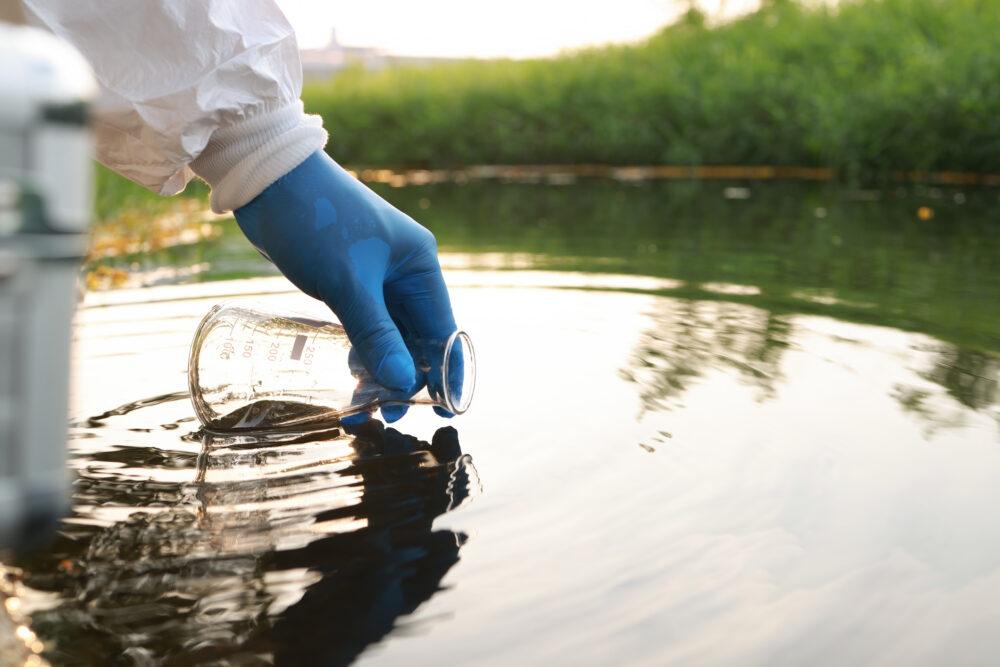
Communities across the United States are discovering PFAS contamination in drinking water, groundwater, rivers, lakes, farmland, and soil at an increasing rate. As testing becomes more widespread, more neighborhoods are learning that “forever chemicals” have been present in their environment for years or even decades.
Naturally, one of the first questions people ask is:
If we know PFAS are dangerous, why can’t we simply clean them up?
The reality is that PFAS contamination presents one of the most difficult environmental cleanup challenges scientists and engineers have ever faced. Unlike many pollutants that naturally break down over time, certain PFAS compounds can persist in the environment for decades while continuing to spread through water, soil, and living organisms.
Although significant progress has been made in water treatment and environmental remediation, removing PFAS from the environment remains expensive, technically complex, and often a long-term process.
What Makes PFAS Different?
Per- and polyfluoroalkyl substances (PFAS) are a large family of human-made chemicals that have been used for decades in manufacturing, industrial processes, firefighting foam, food packaging, textiles, and countless consumer products.
Their unique chemical structure makes them extremely resistant to heat, grease, oil, and water.
Unfortunately, that same chemical stability also makes many PFAS compounds incredibly resistant to natural degradation.
Many environmental contaminants gradually break down through sunlight, bacteria, or chemical reactions.
PFAS generally do not.
Instead, many remain in the environment for years while continuing to migrate through groundwater, rivers, lakes, wetlands, and soil.
That persistence is why they are commonly referred to as forever chemicals.
PFAS Can Travel Long Distances
Cleaning up contamination becomes much more difficult because PFAS rarely stay where they were originally released.
Once these chemicals enter the environment, they may move through:
- Groundwater aquifers
- Surface water
- Stormwater runoff
- Soil
- Sediment
A release from a manufacturing facility, landfill, airport, military installation, or industrial site may eventually affect neighborhoods located miles away.
In many cases, contamination is not discovered until years after the original release occurred.
By that point, PFAS may have spread throughout an entire groundwater system.
There Are Thousands of Different PFAS
Many people think of PFAS as a single chemical.
In reality, PFAS refers to thousands of different compounds.
Some have been studied extensively.
Many have not.
Different PFAS compounds behave differently in the environment.
Some move rapidly through groundwater.
Others attach more readily to soil.
Some accumulate more easily in living organisms.
Others respond differently to treatment technologies.
Because no single cleanup method works equally well for every PFAS compound, environmental remediation often requires multiple strategies.
Water Treatment Does Not Destroy PFAS
One common misconception is that modern water treatment plants eliminate PFAS contamination.
Traditional wastewater treatment generally does not destroy these chemicals.
Instead, treatment often transfers PFAS from one place to another.
For example, treatment systems may remove PFAS from drinking water using:
- Granular activated carbon
- Ion exchange resins
- Reverse osmosis
- Nanofiltration
These technologies can significantly reduce PFAS concentrations in treated water.
However, they do not eliminate the chemicals.
Instead, PFAS become concentrated inside filters, membranes, resins, or waste streams that must still be managed safely.
In other words, the contamination has been captured, not destroyed.
Destroying PFAS Is Extremely Difficult
Actually breaking apart PFAS molecules requires extraordinary conditions.
Researchers are studying several promising destruction technologies, including:
- High-temperature incineration
- Supercritical water oxidation
- Plasma treatment
- Electrochemical oxidation
- Advanced oxidation processes
- Ultrasonic destruction
While many of these technologies show promise, researchers continue evaluating their effectiveness across different PFAS compounds.
Some methods work well for certain chemicals but not others.
Others require enormous amounts of energy or remain too expensive for widespread use.
Scientists continue searching for treatment methods that are both effective and practical for large-scale environmental cleanup.
Soil Cleanup Presents Additional Challenges
Cleaning contaminated drinking water is only part of the problem.
PFAS can also remain in contaminated soil for decades.
Removing contaminated soil often requires excavation and transportation to approved disposal facilities.
Even then, disposal presents additional questions.
If contaminated soil is simply moved elsewhere, has the contamination really been eliminated?
Engineers must carefully evaluate whether contaminated soil should be:
- Excavated
- Contained
- Treated on-site
- Destroyed using emerging technologies
- Safely disposed of
Each approach has advantages and limitations depending on the location and extent of contamination.
Groundwater Cleanup Can Take Years
Groundwater moves slowly beneath the surface.
When PFAS enter an underground aquifer, contamination may continue spreading long after the original release has stopped.
Environmental cleanup often requires years of:
- Groundwater monitoring
- Pump-and-treat systems
- Water sampling
- Treatment system maintenance
- Environmental modeling
Some remediation projects continue for decades before contamination reaches acceptable levels.
This long timeline creates significant costs for communities and responsible parties alike.
Scientists Are Still Learning About PFAS
Research into PFAS continues to evolve rapidly.
Although scientists have learned a tremendous amount over the past decade, important questions remain.
Researchers continue studying:
- How different PFAS compounds behave underground
- How they move through rivers and lakes
- How crops absorb PFAS
- Long-term human health effects
- Better destruction technologies
- New testing methods
- Improved treatment systems
As scientific understanding improves, environmental cleanup strategies continue to evolve as well.
Cleanup Is Often Extremely Expensive
PFAS contamination can affect:
- Municipal drinking water systems
- Private wells
- Farms
- Industrial properties
- Residential neighborhoods
- Rivers
- Wetlands
- Public infrastructure
Addressing contamination may require years of investigation, engineering, permitting, construction, monitoring, and maintenance.
For municipalities alone, installing new treatment equipment can cost millions of dollars.
Those expenses often raise an important legal question:
Who should pay?
Why Identifying the Source Matters
Cleaning up PFAS contamination is only one part of the solution.
Investigators must also determine where the contamination originated.
Possible sources include:
- Chemical manufacturers
- Industrial facilities
- Airports
- Military bases
- Firefighter training facilities
- Landfills
- Wastewater treatment systems
- Manufacturing plants
Understanding how contamination entered the environment helps investigators determine whether additional releases are continuing and who may ultimately be responsible for cleanup costs.
Environmental investigations often include groundwater sampling, soil testing, historical site reviews, environmental modeling, and chemical fingerprinting to better understand contamination pathways.
Environmental Laws Play an Important Role
Federal and state environmental laws provide tools for investigating contamination and requiring cleanup.
Recent EPA actions have expanded attention on PFAS contamination, while additional regulations continue to evolve regarding drinking water, hazardous substances, industrial releases, and environmental monitoring.
In some situations, government agencies may require responsible parties to investigate contamination, conduct cleanup activities, reimburse cleanup costs, or address ongoing environmental hazards.
Environmental litigation may also help communities recover damages associated with contaminated drinking water, property damage, investigation costs, and other losses resulting from PFAS releases.
What Should Communities Do?
If PFAS contamination has been identified in your community, staying informed is important.
Residents should consider:
- Reviewing local drinking water reports
- Following updates from environmental agencies
- Asking whether groundwater investigations are underway
- Understanding potential contamination sources nearby
- Preserving records related to water testing and filtration expenses
- Learning whether cleanup efforts are ongoing
Every contamination event is different, and understanding the scope of contamination often requires careful scientific investigation.
The Challenge Is Great, but Progress Is Being Made
PFAS cleanup remains one of the most difficult environmental challenges facing scientists today.
Their persistence, mobility, and chemical stability make these compounds far more difficult to remove than many traditional pollutants. While researchers continue developing new technologies capable of destroying PFAS more efficiently, today’s cleanup efforts often focus on containing contamination, reducing human exposure, and preventing additional releases.
At the same time, identifying the source of contamination remains just as important as developing better treatment methods. Communities should not bear the financial burden of cleaning up pollution caused by irresponsible chemical releases.
At Stag Liuzza, our environmental attorneys represent individuals, families, and communities affected by PFAS contamination, groundwater pollution, and other forms of environmental pollution. If you believe forever chemicals have contaminated your drinking water, private well, property, or community, our team can help you understand your legal rights and explore your available options.
This article is intended for informational purposes only and should not be considered legal advice. Every environmental contamination case involves unique facts that should be evaluated individually.