For many communities across the United States, industrial pollution isn’t an abstract environmental issue. It’s something that affects the air people breathe, the water they drink, and the land surrounding their homes.
A manufacturing facility may have operated near a neighborhood for decades. Residents might notice unusual odors, discolored water, or changes to nearby waterways without knowing whether those conditions are connected to industrial activity.
Sometimes, contamination isn’t discovered until environmental testing reveals hazardous substances in the soil, groundwater, or surrounding environment.
When pollution is linked to industrial operations, communities often face difficult questions. How long has the contamination been present? Who caused it? What health or property risks does it create? And who should be responsible for the cost of addressing the damage?
These questions are at the center of many environmental contamination lawsuits.
At Stag Liuzza, our attorneys represent individuals, property owners, and communities affected by industrial pollution. Our environmental pollution lawyers investigate complex contamination claims and pursue accountability when negligent or otherwise legally actionable conduct causes environmental harm.
What Is an Environmental Contamination Lawsuit?
An environmental contamination lawsuit is a legal action involving pollution that has caused, or allegedly caused, harm to people, property, natural resources, or the surrounding environment.
These cases may involve industrial facilities, chemical manufacturers, waste disposal operations, oil and gas companies, or other businesses whose activities release harmful substances.
Unlike a typical personal injury case involving a single accident, environmental contamination may develop gradually over many years.
A factory might release chemicals into nearby soil. Those substances may eventually migrate into groundwater or surface water. Industrial emissions may affect surrounding neighborhoods, while improperly disposed hazardous waste can remain in the environment long after a facility closes.
Environmental litigation may seek compensation for injuries and property damage, recovery of qualifying cleanup costs, or other remedies available under applicable law.
Some cases involve individual property owners. Others involve entire neighborhoods, municipalities, businesses, or public water systems.
The legal claims and available remedies depend on the circumstances, but the central question is often the same: Did a company’s conduct cause legally actionable environmental harm?
What Types of Industrial Pollution Can Lead to Lawsuits?
Industrial contamination can affect different parts of the environment, and each type of pollution presents unique challenges.
Air Pollution and Industrial Emissions
Factories, refineries, chemical plants, and other industrial facilities may release pollutants into the air through manufacturing processes, combustion, equipment leaks, or accidental releases.
Depending on the substances involved, air pollution can create concerns about respiratory health, environmental exposure, and the use and enjoyment of nearby property.
Potential contaminants may include volatile organic compounds, particulate matter, hazardous air pollutants, and other industrial emissions.
For example, residents living near a chemical manufacturing facility may report recurring chemical odors or concerns about emissions.
Those complaints may warrant investigation, but the presence of an odor alone does not establish that a legal violation occurred or that a particular health condition was caused by the facility.
Environmental testing, emissions records, medical evidence, and expert analysis may be necessary to determine whether a viable claim exists.
Soil Contamination
Industrial chemicals can enter soil through spills, leaking storage tanks, improper waste disposal, and historical manufacturing activities.
Contaminated soil may affect residential neighborhoods, commercial properties, agricultural land, and undeveloped property.
Depending on the substance and exposure conditions, contamination may create direct contact risks, affect vegetation, or migrate into nearby water sources.
For property owners, the consequences can include restrictions on land use, expensive environmental assessments, and potential reductions in property value.
Groundwater and Surface Water Pollution
Industrial contaminants can enter rivers, lakes, wetlands, and underground water supplies.
Some chemicals travel considerable distances after being released, making it difficult to identify the original source.
Polluted water can create major financial challenges for municipalities, public utilities, businesses, and private well owners.
For a closer look at these claims, visit our water contamination litigation practice.
Hazardous Waste and Chemical Disposal
Industrial waste may contain substances that require specialized handling, treatment, or disposal.
When hazardous materials are improperly managed, they can contaminate surrounding land and water.
In some cases, disposal practices that occurred decades ago continue to affect nearby communities.
Oil, Fuel, and Industrial Chemical Spills
Leaks from pipelines, storage tanks, industrial equipment, and transportation systems can release petroleum products or other chemicals into the environment.
The resulting contamination may damage property, affect waterways, and require extensive cleanup.
Liability depends on the source of the release, the parties involved, and the applicable environmental laws.
How Can Industrial Pollution Affect an Entire Community?
One of the most difficult aspects of environmental contamination is that the harm may extend far beyond the property where the pollution originated.
A chemical release at one facility can potentially affect surrounding neighborhoods, businesses, farmland, and public infrastructure.
The consequences may include several types of harm.
Health concerns: Exposure to certain pollutants can increase the risk of adverse health effects. The specific risks depend on the substance, concentration, duration of exposure, and individual circumstances.
Property damage: Contamination may reduce property value, interfere with normal property use, or require expensive testing and remediation.
Drinking water disruptions: Communities may need alternative water sources or specialized treatment when contamination affects public water systems or private wells.
Economic losses: Businesses and agricultural operations may experience losses when contamination disrupts operations or limits access to land and water.
Long-term uncertainty: Residents may spend years trying to understand the extent of pollution and whether it has affected their health or property.
Not every community exposed to industrial activity will experience these consequences. Establishing the nature and extent of harm requires evidence.
However, when widespread contamination is confirmed, the financial and personal impact can be substantial.
Industrial Pollution in Louisiana: Why Environmental Accountability Matters
Louisiana has a long history of industrial manufacturing, petroleum refining, chemical production, and energy development.
These industries are an important part of the state’s economy, but industrial activity also creates environmental responsibilities.
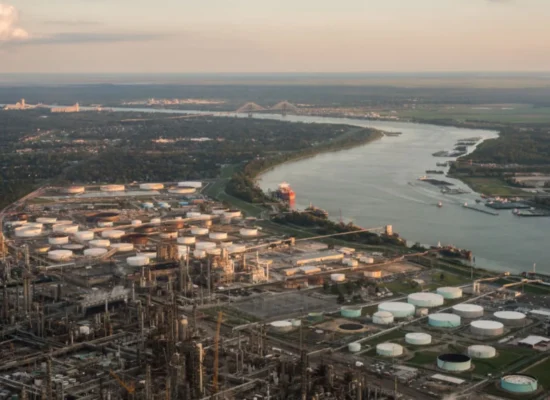
The Mississippi River industrial corridor between Baton Rouge and New Orleans contains numerous chemical plants, refineries, and manufacturing facilities.
Some communities along this corridor have raised longstanding concerns about industrial emissions, environmental contamination, and potential health risks.
The region is sometimes referred to as Cancer Alley, a name reflecting concerns about industrial pollution and cancer risks in certain communities.
However, cancer risks and exposure conditions vary by location. The presence of an industrial facility or an elevated community-level risk estimate does not, by itself, establish that a particular company caused an individual’s illness.
Environmental litigation requires a more specific investigation into the pollutants involved, potential exposure pathways, and the evidence connecting the alleged harm to a responsible party.
Louisiana’s industrial history also creates complicated questions about older contamination.
A facility may have changed ownership several times. Waste disposal practices may have occurred decades earlier. Records may be incomplete, and contamination may have spread beyond the original property.
These challenges make thorough scientific and legal investigation especially important.
Stag Liuzza is based in New Orleans and represents clients in environmental pollution cases involving industrial contamination and complex environmental damage.
How Can Communities Prove an Industrial Facility Caused Pollution?
Proving environmental responsibility is often one of the most challenging parts of a contamination lawsuit.
A community may know that hazardous substances are present, but identifying where they originated and connecting them to a particular defendant can require extensive investigation.
Environmental Sampling and Testing
Environmental scientists may collect samples of soil, groundwater, surface water, sediment, or air.
Laboratory analysis can identify contaminants and measure their concentrations.
These results help establish the nature and geographic extent of contamination.
However, finding a chemical near an industrial facility does not automatically prove that the facility released it.
Additional evidence may be necessary to distinguish between potential sources.
Historical Facility and Regulatory Records
Industrial operations often generate extensive documentation.
Investigators may review environmental permits, inspection reports, chemical inventories, waste disposal records, historical property records, and correspondence with regulators.
These documents can help establish which substances were used or released, how waste was managed, and whether the company knew about potential environmental problems.
Contamination Pathway Analysis
Scientists may study how pollutants travel through air, soil, and water.
For groundwater cases, hydrogeologists can examine underground water movement and contaminant migration.
For air pollution cases, specialists may use emissions information and atmospheric dispersion modeling to evaluate potential exposure pathways.
The appropriate methods depend on the contaminant and the environmental conditions.
Medical and Toxicological Evidence
When residents allege that pollution caused illness, additional evidence is usually required.
Medical experts and toxicologists may evaluate the relationship between a chemical and a particular health condition, the estimated exposure, and other possible contributing factors.
This distinction matters because evidence that a substance can cause a disease is not necessarily sufficient to establish that it caused an individual person’s illness.
Expert Testimony
Environmental cases frequently involve specialists in chemistry, engineering, toxicology, medicine, geology, and other technical fields.
Their analysis may help explain how contamination occurred, whether a defendant’s conduct contributed to it, and what damages resulted.
The environmental litigation attorneys at Stag Liuzza work on cases involving complex scientific evidence and multiple potentially responsible parties.
What Legal Options Do Communities Have Against Industrial Polluters?
Environmental contamination lawsuits may involve several different legal approaches.
The available options depend on the type of pollution, the parties involved, the jurisdiction, and the harm suffered.
Negligence Claims
A negligence claim may arise when a company fails to exercise legally required care and that failure causes harm.
For example, an industrial operator may allegedly fail to maintain equipment properly, resulting in a chemical release that damages nearby property.
To succeed, the claimant generally must establish the applicable duty, breach, causation, and legally recoverable damages.
Nuisance and Property-Related Claims
Depending on state law, environmental contamination may support claims involving interference with the use and enjoyment of property.
For example, recurring pollution affecting a residential property may raise questions about whether the interference is legally actionable.
The requirements vary by jurisdiction, and not every unpleasant condition or environmental concern supports a nuisance claim.
Trespass Claims
Certain forms of physical contamination may support a trespass claim under applicable state law.
These cases can involve questions about whether pollutants entered another person’s property and whether the defendant’s conduct satisfies the jurisdiction’s legal requirements.
Federal Environmental Laws
Federal statutes may provide additional remedies in qualifying cases.
The Comprehensive Environmental Response, Compensation, and Liability Act (CERCLA), commonly known as Superfund, establishes a framework for addressing certain hazardous substance releases and recovering eligible response costs.
Other environmental statutes, including the Resource Conservation and Recovery Act (RCRA) and the Clean Water Act, may provide regulatory enforcement mechanisms or limited citizen-suit remedies when their specific requirements are met.
These laws do not automatically provide monetary compensation for every injury or property loss.
In many situations, affected parties pursue state-law claims alongside or separately from remedies available under federal environmental statutes.
Can Communities File Lawsuits Together?
When industrial pollution affects a large number of people, multiple individuals or entities may have related claims.
However, there is no single legal procedure that applies to every widespread contamination case.
Individual Lawsuits
An individual property owner or resident may pursue a claim based on their specific injuries or property damage.
This approach can be important when the harm varies substantially among affected people.
Class Actions
In some circumstances, a court may permit a class action involving individuals whose claims satisfy applicable procedural requirements.
Class actions can provide a way to address certain common legal and factual questions, but they are not appropriate for every environmental dispute.
Differences in exposure, causation, damages, and other factors may complicate class certification.
Consolidated Litigation
Courts may coordinate related lawsuits to improve efficiency.
When many federal cases share common factual questions, multidistrict litigation may be used to coordinate pretrial proceedings.
However, multidistrict litigation is not itself a class action, and individual claims generally retain their separate identities unless resolved through applicable procedures.
The appropriate approach depends on the facts and legal issues involved.
What Compensation May Be Available in Environmental Contamination Lawsuits?
The damages available depend on the legal claims, applicable law, and evidence of harm.
Potential categories include:
- Property damage: Loss of property value, restoration costs, or interference with property use
- Environmental remediation: Qualifying costs associated with investigating, containing, or cleaning up contamination
- Medical expenses: Treatment costs connected to injuries legally established as resulting from toxic exposure
- Lost income: Financial losses caused by compensable injuries or business disruptions
- Pain and suffering: Certain physical and emotional consequences of proven personal injuries
- Water treatment costs: Qualifying expenses incurred by municipalities or utilities to address contaminated water supplies
Some claims may also involve requests for injunctive or other equitable relief, depending on the applicable law.
Importantly, the presence of contamination does not automatically establish entitlement to every category of damages.
A property owner seeking compensation for contaminated land may have different legal requirements than a resident alleging an exposure-related illness.
Similarly, a municipality seeking recovery of cleanup expenses may rely on different legal theories than an individual personal injury claimant.
What If a Company Followed Its Environmental Permits?
A common question in environmental litigation is whether a company can face legal responsibility if it operated under government-issued permits.
The answer depends on the circumstances and the claims involved.
Environmental permits establish conditions under which certain industrial activities may occur. They do not necessarily resolve every question of civil liability.
A company may comply with some regulatory requirements while still facing allegations involving property damage, negligence, or other legally actionable conduct.
At the same time, permit compliance can be important evidence, and federal or state law may limit certain claims or remedies.
Whether a lawsuit can proceed requires evaluating the specific permits, alleged conduct, applicable statutes, and legal defenses.
What Should Residents Do if They Suspect Industrial Contamination?
If you believe industrial pollution is affecting your neighborhood, there are several practical steps you can take.
Document the Conditions
Keep records of unusual environmental conditions, including dates, locations, photographs, and any available observations.
Avoid entering restricted areas or attempting to collect hazardous materials yourself.
Report Concerns to Environmental Authorities
Residents can contact appropriate state or federal environmental agencies to report suspected contamination.
In Louisiana, the Louisiana Department of Environmental Quality oversees many environmental regulatory programs.
Regulators may evaluate complaints, conduct inspections, or determine whether additional investigation is appropriate.
Seek Appropriate Medical Care
If you believe you have been exposed to a hazardous substance or are experiencing concerning symptoms, consult a qualified healthcare professional.
Medical evaluation can help address immediate health concerns and document relevant symptoms.
Preserve Property and Environmental Records
Keep copies of water testing results, property assessments, environmental notices, medical documentation, and correspondence related to the suspected contamination.
Understand Your Legal Options
Environmental contamination claims can involve complicated questions about responsibility, causation, and filing deadlines.
Consulting an attorney experienced in environmental litigation can help determine whether the available evidence supports further investigation.
Frequently Asked Questions About Environmental Contamination Lawsuits
Can residents sue a factory for pollution?
Potentially. Residents may have legal claims when a factory’s conduct causes legally actionable personal injury, property damage, or other harm. The available remedies depend on the evidence and applicable law.
Can a company be responsible for pollution that happened decades ago?
Yes, in certain circumstances. Historical contamination may support claims under applicable environmental or civil laws. However, filing deadlines, changes in ownership, statutory defenses, and other factors can affect liability.
Do you need to prove a health condition to file an environmental lawsuit?
Not always. Some environmental claims involve property damage, qualifying cleanup costs, or other legally recognized harm rather than personal injury. The required evidence depends on the type of claim.
What if several factories may have contributed to the contamination?
Multiple potentially responsible parties can make a case more complicated, but it does not necessarily prevent litigation. Scientific investigation and applicable liability rules help determine whether individual companies can be held accountable.
Can an entire neighborhood file an environmental contamination lawsuit?
Potentially. Related claims may be pursued through individual lawsuits, coordinated litigation, or a class action when the legal requirements are satisfied. The appropriate approach depends on the similarities and differences among the claims.
How long do environmental contamination lawsuits take?
Timelines vary considerably. Some cases resolve through negotiations, while others require years of investigation, expert analysis, discovery, and litigation.
Is industrial pollution automatically illegal if it affects nearby residents?
No. The presence of industrial emissions or contamination does not automatically establish a legal violation or civil liability. The applicable standards, source of pollution, conduct involved, and evidence of harm must be evaluated.
Holding Industrial Polluters Accountable for Environmental Harm
Industrial pollution can leave communities facing difficult questions long after the original contamination occurred.
Residents may worry about their health, property owners may struggle with the consequences of contaminated land, and local governments may face substantial costs associated with environmental testing and cleanup.
Holding responsible parties accountable often requires more than identifying the presence of hazardous substances.
It may involve reconstructing decades of industrial activity, tracing pollutants through the environment, evaluating medical and scientific evidence, and determining which legal claims are available.
At Stag Liuzza, our attorneys represent individuals, landowners, and communities affected by industrial pollution in Louisiana and across the United States.
Our firm has experience pursuing complex environmental claims involving industrial contamination, toxic exposure, and damage to land and water resources.
If your community has been affected by industrial pollution, our environmental contamination lawyers can help evaluate the circumstances and explain your legal options.
Contact Stag Liuzza to discuss your environmental contamination concerns.