Jeannine Henderson sprinkled powder on her sheets and pillows and used it on her two children. Decades later, those routines became evidence in a New Orleans lawsuit over Johnson & Johnson’s talc-based baby powder. A separate Orleans Parish jury awarded $10 million Roy family’s mesothelioma case in August. These two verdicts may be the start of a new wave of asbestos related injury lawsuits.
How can asbestos get into baby powder?
Talc is a naturally occurring mineral, specifically a hydrated magnesium silicate, that becomes dust or powder when crushed, milled, or dispersed into the air. It is mineral dust. Talc and asbestos can occur near each other underground where it is mined. Asbestos can contaminate mined talc, and applying contaminated powder can release fibers into the air. Breathing asbestos fibers can cause mesothelioma, a cancer that often develops in the lining around the lungs. Symptoms can take decades to appear.
What do the bottle photos show?
Stag Liuzza received this parody of a Johnson’s baby powder bottle from a consultant to illustrate the science showing the potential danger of talcum powder that contains asbestos fibers. The back label describes testing showing “This Bottle Might Contain Over 3,850,000,000 Asbestos Structures Which Cause Cancer and Mesothelioma,” and concludes that this would be enough asbestos to give 32 people mesothelioma. While this illustration may appear dramatic, the danger posed by exposure to asbestos is true.
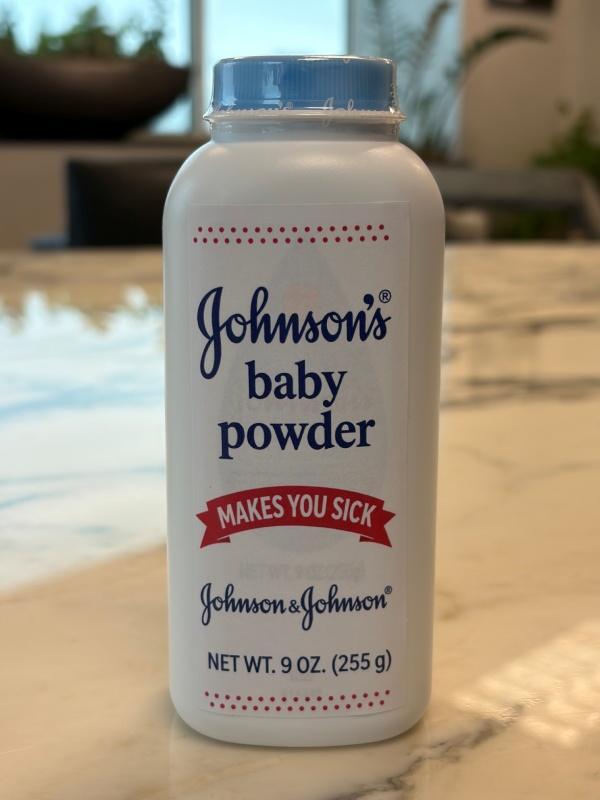
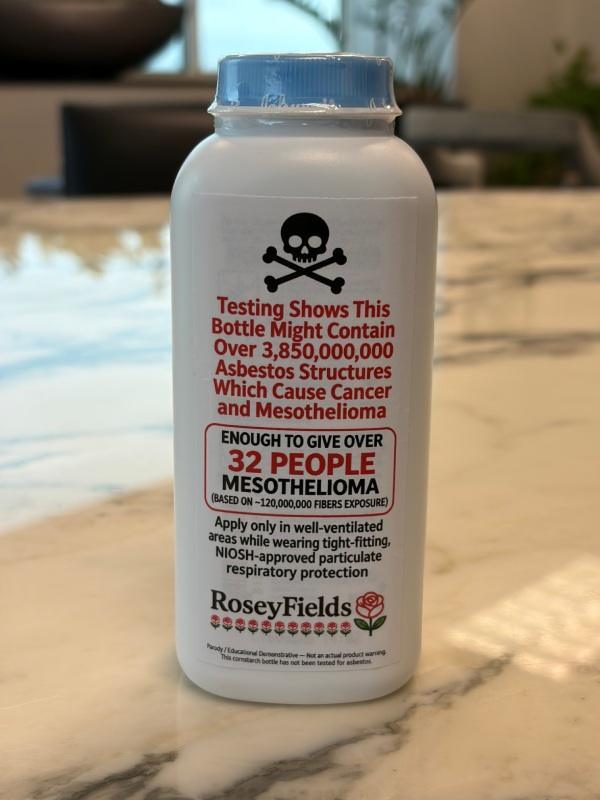
Front and back of the scientist’s demonstration bottle. The warning text is part of the demonstration.
The Roy Verdict: What did the New Orleans jury decide?
Lynne Roy used talc products for decades before she died of mesothelioma in 2020. On August 21, 2026, jurors found that asbestos exposure from Johnson & Johnson products significantly contributed to her illness. They also found that Johnson & Johnson failed to warn consumers about the danger.
How did the jury divide the $10 million award?
Jurors awarded $8 million for Roy’s pain, mental anguish and loss of enjoyment of life. They awarded her daughters, Melissa Kaiser and Melanie Roy, $1 million each for losing their mother. Several companies shared responsibility. Johnson & Johnson’s share came to just over $1.2 million.
The Henderson Case
Henderson’s case gives families a closer look at how jurors evaluate exposure. Her sons recalled the powder she kept at home. Experts discussed tests on older containers, her medical records and other possible asbestos exposures on Louisiana’s West Bank. After hearing both sides, the jury assigned Johnson & Johnson 47% of the fault.
The Henderson award
The trial judge increased damages for Henderson’s suffering and for her sons’ loss after hearing evidence about her final years. Her illness progressed until she needed hospice care, and she could attend her son’s wedding only by video. On November 16, Louisiana’s Fourth Circuit upheld the judgment, totaling about $9.07 million before allocating fault.
What can families document after a diagnosis?
Some baby powder lawsuits involve ovarian cancer. In a mesothelioma case, a useful starting point is identifying when and where someone may have breathed asbestos fibers. Write down the brands you remember, who applied the powder and how often. Family photographs, old packaging and relatives’ memories can help establish which product someone used.
What if more than one exposure was possible?
Include jobs, work clothes brought home and other potential asbestos sources when describing your history. Those details help an attorney evaluating an asbestos exposure claim understand how household powder fits into the larger picture. If someone in your family developed mesothelioma, you can speak with an attorney about the evidence specific to your situation. You are encouraged to contact the attorneys at Stag Liuzza by calling (504) 593-9600.