Who qualifies as a seaman under the Jones Act depends on your specific work history and day-to-day job duties, not just your official job title. To receive these strong federal injury protections, you generally must spend at least 30 percent of your working time in the service of a vessel (or identifiable group or fleet of vessels) that operates on navigable waters. If you meet these legal criteria, you have the right to seek full damages from your employer if their negligence caused your injury.
Why Your Legal Classification Matters After a Maritime Injury
If you get hurt working on land in Louisiana, your recovery options against your employer are almost always limited to state workers’ compensation. This system pays for your medical care and a portion of your lost wages, but it prevents you from suing your employer for making a mistake.
Maritime law is entirely different. If you fit the legal definition of a seaman, the Jones Act grants you the right to sue your employer for negligence. This allows you to seek complete compensation for damages that standard workers’ compensation ignores, including pain and suffering, mental anguish, and your lost future earning capacity. Because the financial stakes are so high, employers and their insurance companies will look closely at your job duties to see if they can disqualify you from seaman status.
The Core Requirements to Qualify as a Seaman
The Jones Act itself does not explicitly define what a seaman is, so federal courts have had to establish the rules over the last century. Today, judges use a two-part test to determine your status. You must prove that your duties contribute to the overall mission of a vessel, and you must have a connection to that vessel that is substantial in both duration and nature.
Spending Enough of Your Working Time on the Water
To satisfy the duration part of the test, courts look at your overall employment history with your company. As a general rule, you must spend at least 30 percent of your total working time on board a vessel. If your job keeps you in a shore-side office or a warehouse for most of the week and you only spend 10 percent of your time on a boat, you likely will not qualify as a seaman.
Having a Substantial Connection to a Vessel or a Specific Fleet
Your connection to the water must be a regular, dependable part of your job, rather than a temporary or random assignment. However, you do not have to spend all your time on one specific ship. If your employer owns an identifiable fleet of tugboats or barges and you rotate between them regularly, courts will look at your cumulative time across that entire group of vessels to see if you hit the 30 percent threshold.
Regular Exposure to the Perils of the Sea
To satisfy the nature inquiry, courts focus on whether the employee’s duties regularly take them to sea and expose them to the perils of the sea. If an employee performs a significant part of their work on board a vessel with a degree of regularity and continuity, the requirement is generally met.
Specific Nature-of-Work Factors
Courts also consider three specific factors to determine if the substantial connection requirement is met:
- Whether the worker owes their allegiance to the vessel rather than simply to a shoreside employer
- Whether the work is sea-based or involves seagoing activity
- Whether the worker’s assignment is limited to a discrete, temporary task after which their connection ends, or if the assignment includes sailing with the vessel from port to port or location to location.
What Qualifies as a Vessel in Navigation?
To be protected by the Jones Act, you must be assigned to a vessel that is considered in navigation. This is a specific legal term meaning the structure must be afloat, operational, capable of moving on the water, and located on a navigable waterway.
Moving Vessels, Tugs, and Barges
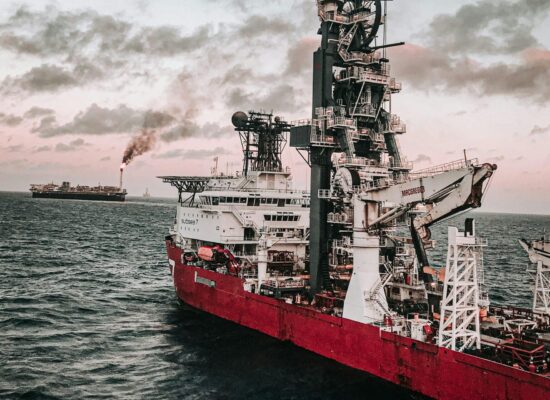
Traditional ships, cargo tankers, tugboats, supply boats, and crewboats are clear examples of vessels in navigation. Barges can also qualify, even though they lack their own engines and must be pushed or pulled by a tugboat.
Mobile Drilling Structures Versus Fixed Oil Platforms
This distinction is incredibly important for oilfield workers in the Gulf of Mexico. Drillships, jack-up rigs, and semi-submersible rigs can float and move from one lease block to another, meaning they are legally classified as vessels. Fixed platforms, on the other hand, are permanently anchored to the ocean floor and are considered artificial islands. If you are hurt on a fixed platform, you cannot file a Jones Act claim.
Ships at the Dock or Undergoing Maintenance
A vessel does not need to be actively moving at sea for you to maintain your seaman status. A ship that is tied to a dock, loading cargo, or undergoing routine maintenance is still considered in navigation. However, if a ship is taken out of the water and placed in a dry dock for major structural overhauls or decommissioning, it is temporarily out of navigation.
What Counts as Navigable Waters?
The vessel you are assigned to must operate on navigable waters. If a body of water cannot be used for commercial shipping or trade, it does not meet the legal standard.
Waterways Used for Trade and Commerce
Navigable waters include the oceans, the Gulf of Mexico, and any lakes or rivers that cross state lines or connect directly to the sea. The defining factor is whether the waterway can serve as a highway for interstate or international commerce.
How Louisiana Rivers, Bayous, and Canals Fit the Definition
In Louisiana, this definition covers major commercial routes like the Mississippi River and the Intercoastal Waterway, but it also includes many of our bayous and canals. If a canal connects to a larger river system and is regularly used by commercial vessels or oilfield supply boats, it counts under maritime law. A landlocked, private pond on a piece of property would not.
Why Your Job Title Does Not Limit Your Rights
Many workers assume that because they do not have a captain’s license or a traditional deckhand title, they are excluded from Jones Act protections. This is a misconception. Maritime law prioritizes your actual day-to-day work over the title printed on your paycheck.
Contributing to the Mission of the Ship
If your daily labor helps the ship accomplish its intended purpose, you satisfy this part of the legal test. A vessel requires more than just someone at the helm to operate effectively; it needs a complete ecosystem of workers to function safely.
Examples of Covered Crew Members From Deckhands to Galley Cooks
Because the courts interpret this requirement broadly, a wide variety of workers qualify for Jones Act protection. This includes engineers and mechanics working in the engine room, cooks and stewards preparing meals in the galley, crane operators, and even scientific technicians or divers operating from a specialized vessel. If you are a regular member of the crew and meet the time requirements, you are a seaman.
Knowing Where You Stand if You Do Not Qualify as a Seaman
If you work on or near the water but do not meet the 30 percent threshold, you still have federal protections, but you fall under a different legal framework.
Harbor Workers and Longshoremen
If you work on the docks, load and unload cargo as a stevedore, or repair ships in a shipyard, you are typically covered by the Longshore and Harbor Workers’ Compensation Act. This system provides reliable medical benefits and wage replacement without requiring you to prove your employer did something wrong. You also have the right to pursue third-party negligence damages.
Fixed Platform Workers in the Gulf
For oilfield workers on fixed platforms in the Gulf of Mexico, injury claims are usually governed by the Outer Continental Shelf Lands Act. This framework extends longshore benefits to offshore workers who are not assigned to a floating vessel. However, depending on the specific circumstances of the incident, workers may also pursue alternative remedies, including third-party negligence claims.
Get a Clear Assessment of Your Maritime Case
Determining your legal status after a maritime injury can be complicated, and insurance companies frequently try to classify workers in whatever category costs them the least amount of money. If you have been hurt while working on or near the water in Louisiana, the team at Stag Liuzza can help you evaluate your case. Contact us today to discuss your situation and ensure your rights are protected.