











illustrated image of polluted drinking water coming out of faucet
Play Video Button
illustrated image of polluted drinking water coming out of faucet

Water Contamination

Water systems should provide safe, reliable drinking water, not expose communities to hidden chemical risks. When contamination affects groundwater and public supplies, the consequences can last for decades. Partner with a law firm that understands complex environmental litigation.
Partner with Stag Liuzza.
Play Video Button

PFAS and 1,4-Dioxane Litigation for Communities and Water Systems

Water contamination can affect entire communities for years before it is fully understood.

Across the United States, public water systems, municipalities, and private property owners are discovering contamination caused by industrial chemicals such as PFAS and 1,4-dioxane. These substances can move through groundwater, persist in the environment, and create long-term health and financial risks.

Stag Liuzza represents public entities and communities facing complex water contamination issues, including claims involving PFAS “forever chemicals” and 1,4-dioxane exposure.

If your water system has been impacted, understanding the source of contamination and your legal options is critical.

What we Do — Water Contamination Litigation

Our firm has built a nationally recognized reputation through the complex environmental contamination cases we handle every day, including water system and groundwater pollution claims, and our consistent success in achieving results for the communities we represent.

stag liuzza team looking at a map together

What Is Water Contamination?

Water contamination occurs when harmful chemicals enter drinking water sources such as groundwater, rivers, or municipal systems.

Unlike temporary pollutants, chemicals like PFAS and 1,4-dioxane are particularly concerning because they:

  • persist in the environment for long periods

  • migrate through soil and groundwater

  • resist traditional water treatment methods

  • may accumulate over time

These characteristics allow contamination to spread far beyond its original source, sometimes affecting entire regions.

PFAS Contamination and “Forever Chemicals”

PFAS (per- and polyfluoroalkyl substances) are a group of synthetic chemicals used in industrial processes and consumer products for decades.

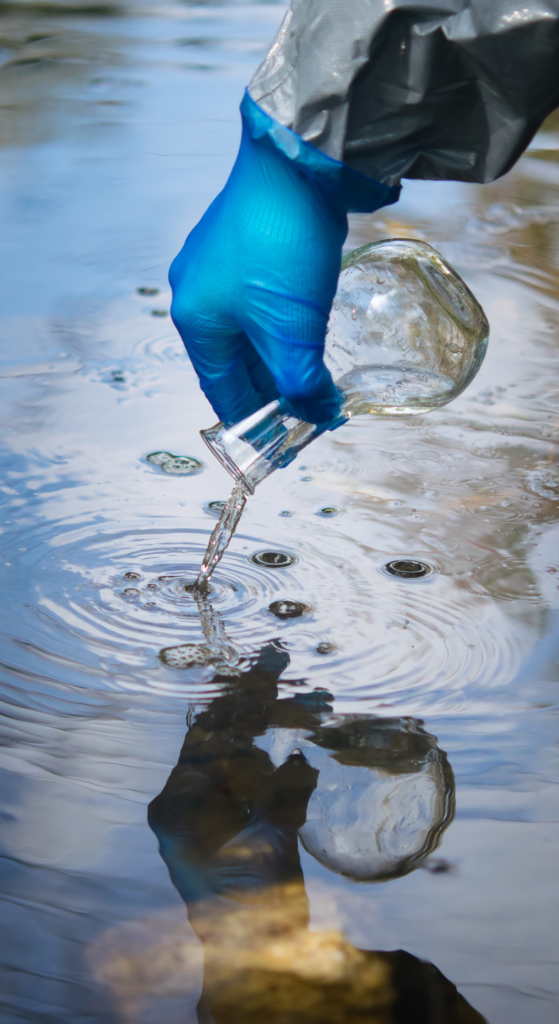
Scientist observing microplastics particles in a flask with a water sample.

They are commonly associated with:

  • firefighting foam used at airports and military bases

  • chemical manufacturing facilities

  • industrial waste disposal

  • certain consumer and commercial products

PFAS are often referred to as “forever chemicals” because they do not break down naturally in the environment.

Studies have linked PFAS exposure to a range of potential health concerns, including immune system effects, liver damage, and increased risk of certain cancers.

Once released, PFAS can enter groundwater and drinking water systems, creating long-term contamination challenges for communities.

Scientist observing microplastics particles in a flask with a water sample.

They are commonly associated with:

  • firefighting foam used at airports and military bases

  • chemical manufacturing facilities

  • industrial waste disposal

  • certain consumer and commercial products

PFAS are often referred to as “forever chemicals” because they do not break down naturally in the environment.

Studies have linked PFAS exposure to a range of potential health concerns, including immune system effects, liver damage, and increased risk of certain cancers.

Once released, PFAS can enter groundwater and drinking water systems, creating long-term contamination challenges for communities.

1,4-Dioxane Contamination in Drinking Water

closeup water flow to hand of women for nature concept on the garden background.

1,4-dioxane is a synthetic chemical used as a solvent and stabilizer in industrial processes. It is also found as a byproduct in products such as detergents and cleaning agents.

Unlike many contaminants, 1,4-dioxane:

  • dissolves easily in water
  • does not bind well to soil
  • moves quickly through groundwater

This allows it to spread beyond initial contamination sites and affect drinking water supplies.

Government agencies have identified 1,4-dioxane as a likely human carcinogen, with studies linking exposure to liver and kidney damage and increased cancer risk.

Because it is difficult to remove using conventional treatment methods, contamination can require costly long-term solutions.

1,4-dioxane is a synthetic chemical used as a solvent and stabilizer in industrial processes. It is also found as a byproduct in products such as detergents and cleaning agents.

Unlike many contaminants, 1,4-dioxane:

  • dissolves easily in water

  • does not bind well to soil

  • moves quickly through groundwater

This allows it to spread beyond initial contamination sites and affect drinking water supplies.

Government agencies have identified 1,4-dioxane as a likely human carcinogen, with studies linking exposure to liver and kidney damage and increased cancer risk.

Because it is difficult to remove using conventional treatment methods, contamination can require costly long-term solutions.

How PFAS and 1,4-Dioxane Enter Water Systems

Water contamination involving these chemicals often begins with industrial or commercial activity.

Common sources include:

  • chemical manufacturing facilities

  • industrial wastewater discharge

  • landfill leachate entering groundwater

  • firefighting foam usage

  • consumer products entering wastewater systems

Once released, these chemicals can migrate into aquifers and surface water sources that supply drinking water.

Groundwater contamination is particularly concerning because it may go undetected for years while continuing to spread.

Who May Be Affected by Water Contamination?

Water contamination cases often involve large-scale exposure rather than isolated incidents.

a woman washing her hands using a public water drinking fountain
Affected parties may include:
  • public water systems and municipal utilities
  • cities and local governments
  • private well owners
  • property owners with contaminated land
  • communities located near industrial sites
In many cases, contamination impacts thousands of residents and requires significant infrastructure upgrades to address.
a woman washing her hands using a public water drinking fountain
Affected parties may include:
  • public water systems and municipal utilities
  • cities and local governments
  • private well owners
  • property owners with contaminated land
  • communities located near industrial sites
In many cases, contamination impacts thousands of residents and requires significant infrastructure upgrades to address.

Damages in Water Contamination Cases

Water contamination can create both immediate and long-term costs.

Potential damages may include:

  • installation of filtration or treatment systems

  • long-term monitoring and testing

  • groundwater remediation

  • replacement of contaminated wells or infrastructure

  • property damage and loss of value

  • public health response costs

Because these cases often involve widespread contamination, the financial impact can be substantial.

Why These Cases Are Complex

Water contamination litigation is often highly technical.

Cases involving PFAS and 1,4-dioxane may require:

  • environmental testing and modeling
  • hydrogeological analysis of groundwater movement
  • identification of multiple responsible parties
  • review of decades of industrial activity
  • coordination with regulatory standards and evolving science

Many cases also involve multiple defendants, including manufacturers, distributors, and industrial operators.

Ongoing PFAS and Water Contamination Litigation

PFAS contamination has become one of the largest environmental litigation areas in the country.

Major settlements have already been reached involving public water systems, with additional claims still being pursued.

However, many contamination issues remain unresolved, particularly for:

  • groundwater remediation

  • wastewater treatment systems

  • emerging contaminants such as 1,4-dioxane

  • sites involving multiple responsible parties

As scientific understanding continues to evolve, new claims and legal strategies continue to emerge.

How Our Water Contamination Lawyers Can Help

Water contamination cases require a coordinated legal and scientific approach.

An experienced legal team can help:

  • identify sources of contamination

  • evaluate environmental testing data

  • determine responsible parties

  • assess available claims and damages

  • pursue recovery for treatment and remediation costs

Because these cases often involve strict deadlines and complex settlement structures, early evaluation is important.

stag liuzza team
stag liuzza team

Why Choose Stag Liuzza As Your Water Contamination Lawyers?

Water contamination cases combine environmental science, regulatory frameworks, and complex litigation against large corporate defendants. Responsible parties often have decades of operational history, and identifying the source of contamination requires detailed investigation and expert analysis.

Stag Liuzza handles complex environmental litigation involving PFAS, 1,4-dioxane, and other groundwater contaminants. Our team works with environmental scientists, hydrogeologists, and technical experts to trace contamination pathways and build cases designed to hold polluters accountable.

We prepare every case as if it will go to trial. That level of preparation strengthens our position in negotiations and helps ensure communities and water systems recover the resources needed to address long-term contamination.

Talk to Our Water Contamination Lawyers

If your municipal water system, community, or property may be affected by PFAS or 1,4-dioxane contamination, it is important to understand your legal options.

Stag Liuzza represents public entities and communities in complex environmental contamination matters across the country, including claims involving groundwater pollution and drinking water systems.

You can speak with our team to learn more about how contamination is identified, what claims may be available, and the steps required to protect your interests.

OUR team

We take the bull by the horns and give you clear and practical advice. Personal, to the point, and in plain language. Any questions? Feel free to call or to drop by.

After reviewing your medical costs, lost wages, and pain and suffering damages, we can help you understand what your case is worth and plan a road map going forward.

$1.056 billion verdict against Exxon Mobil

If you think you may have a claim and need legal help to hold those parties responsible for damage that they have caused, contact an attorney from our firm.
stag liuzza white logo

Stag Liuzza fights industry giants across the country and holds them accountable for their actions. We strive to ensure that communities have access to safe drinking water, clean air, and a healthy environment.

stagliuzza.com is operated and provided by Stag Liuzza, LLC responsible attorneys Michael G. Stag and Ashley M. Liuzza. Stag Liuzza, LLC is officed in New Orleans, LA, and our attorneys are licensed in Louisiana and Mississippi.

Nothing on this site should be taken to establish an attorney-client relationship with us unless and until a contract for representation is signed. The attorneys of Stag Liuzza are licensed in Louisiana and Mississippi and may associate counsel licensed in other jurisdictions as necessary.

Past results do not guarantee any similar result or outcome in your claim. Each claim is different.

This website uses cookies to ensure you get the best experience on our website.