Per- and polyfluoroalkyl substances (PFAS) have emerged as one of the most pressing environmental and legal challenges in the United States. A major source of PFAS contamination is firefighting foam used at airports. This contamination threatens drinking water, leads to complex liability disputes, and places airport authorities under increased regulatory and public scrutiny.
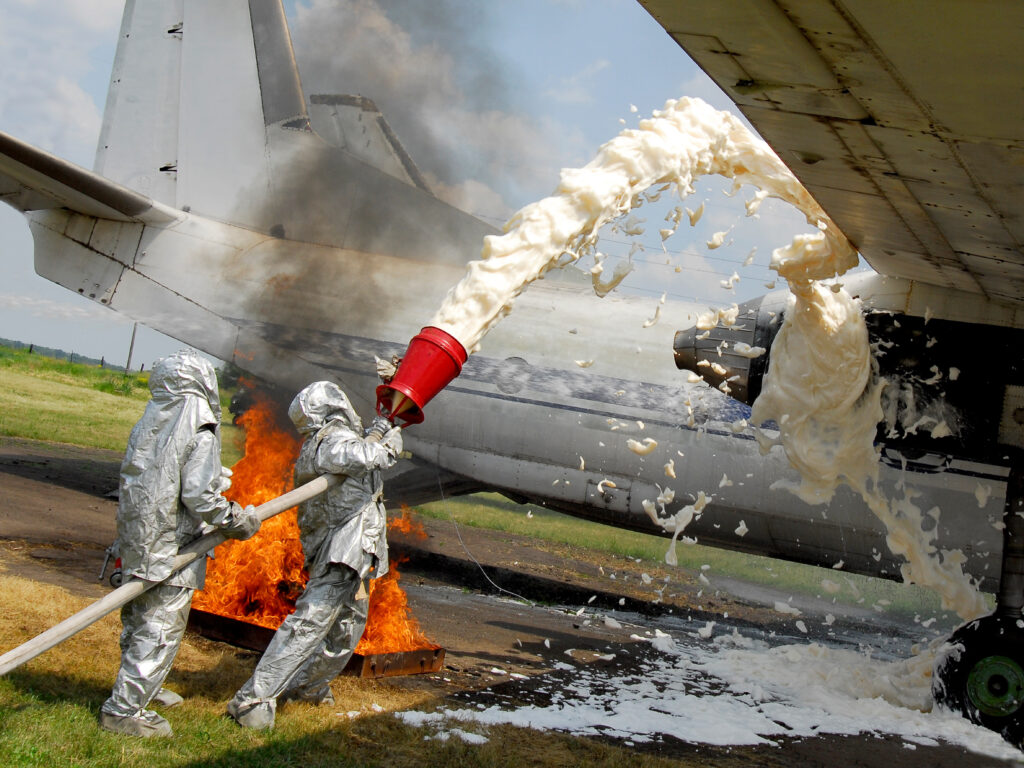
How PFAS Enters the Environment at Airports
AFFF: The Primary Source of PFAS Contamination
Airports have historically relied on Aqueous Film-Forming Foam (AFFF) to fight fuel fires. AFFF contains high concentrations of PFAS, particularly PFOA and PFOS, which are known for their persistence and toxicity in the environment.
The Federal Aviation Administration (FAA) previously required airports certified under 14 CFR Part 139 to use firefighting foam that met the Department of Defense’s MIL-PRF-24385 specification, which included PFAS-based formulations. As a result, airports across the country have used AFFF for decades in emergency response, fire training exercises, and foam system testing.
When AFFF is discharged, PFAS compounds can seep into soil and groundwater or enter nearby surface water through runoff. Once released, PFAS do not easily break down, leading to long-term environmental contamination and migration into municipal water supplies.
Airports with Known PFAS Contamination
Several airports across the U.S. are under investigation or litigation due to PFAS contamination linked to AFFF use. Notable examples include:
Gerald R. Ford International Airport (Michigan)
The Michigan Attorney General filed a lawsuit against the airport in 2023, alleging that AFFF discharges led to PFAS pollution in local groundwater and surface water. The state is seeking damages and remediation under environmental cleanup laws.
Tucson International Airport (Arizona)
In 2024, the EPA entered into an agreement with the airport to investigate and address PFAS contamination that threatens a major drinking water aquifer. The airport is part of a broader Superfund site area involving historical AFFF use.
Fairbanks International Airport (Alaska)
Private wells near the airport showed PFAS levels exceeding health advisory limits. The contamination was traced to historical AFFF use at the airport’s fire training facility.
Pittsburgh International Airport (Pennsylvania)
Environmental groups have raised concerns over PFAS levels in groundwater near the airport, where firefighting foam had been used extensively in training and operations.
Massachusetts Regional Airports
Multiple airports, including Logan International and Barnes Regional, have been identified in state investigations related to PFAS releases from AFFF use.
EPA Standards for PFAS at Airports
Enforceable Drinking Water Standards (MCLs)
In April 2024, the U.S. Environmental Protection Agency (EPA) finalized Maximum Contaminant Levels (MCLs) for several PFAS in drinking water:
- PFOA: 4 parts per trillion (ppt)
- PFOS: 4 ppt
These standards will require public water systems to begin testing by 2027 and implement treatment or other corrective actions by 2029 if PFAS levels exceed these limits.
CERCLA Designation and Reporting Obligations
In 2024, PFOA and PFOS were designated as hazardous substances under CERCLA (Comprehensive Environmental Response, Compensation, and Liability Act). This classification gives the EPA the authority to order cleanups, seek cost recovery, and require release reporting.
Any release of one pound or more of PFOA or PFOS in a 24-hour period must now be reported to the National Response Center.
Importantly, the EPA’s enforcement discretion policy states that it will not pursue CERCLA enforcement against certain “passive” parties, such as municipal airports and fire departments, recognizing that they were required by federal law to use PFAS-containing AFFF.
Legal Risks for Airports and Municipalities
Airports with historic or ongoing AFFF use face significant liability exposure, including:
- Cost recovery actions by water utilities or local governments
- Superfund investigations and cleanup orders
- State-led enforcement and litigation
- Mandated site assessments and long-term groundwater monitoring
Given these risks, airport authorities and municipal stakeholders should:
- Assess historical AFFF use and storage locations
- Engage environmental counsel early in investigations or redevelopment projects
- Consider PFAS testing before property transactions or infrastructure upgrades
- Evaluate alternative firefighting foams as permitted under new FAA guidance
PFAS contamination at airports represents a growing legal and environmental challenge. The use of AFFF, once mandated for aviation safety, has left behind complex legacy pollution issues. As federal and state regulators ramp up enforcement and cleanup efforts, airport sponsors, municipalities, and property owners must act now to assess their liabilities and develop proactive legal strategies.