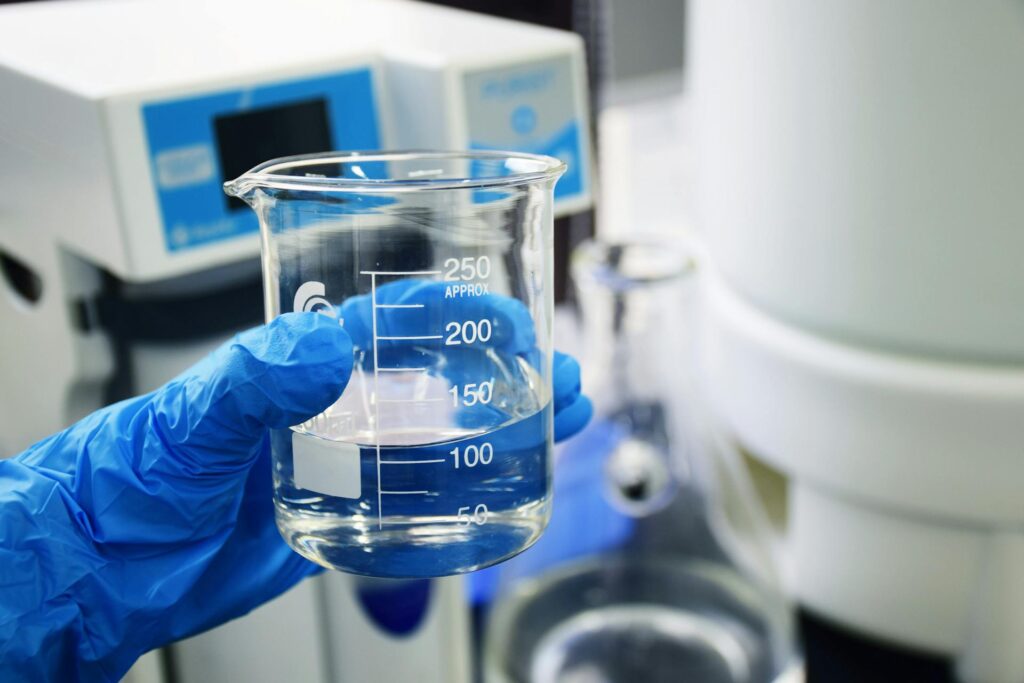
1,4-dioxane is a synthetic chemical that has become an increasing concern in drinking water systems across the United States.
Unlike many contaminants, it is highly mobile, difficult to remove, and can persist in groundwater for long periods of time. In many cases, contamination is not discovered until testing reveals its presence in municipal water systems or private wells.
Understanding how 1,4-dioxane enters drinking water and why it is difficult to control is critical for communities and water providers facing potential exposure.
What Is 1,4-Dioxane?
1,4-dioxane is a man-made chemical historically used as a solvent and stabilizer in industrial processes. It has also been found as a byproduct in the manufacturing of certain consumer products, including detergents, shampoos, and cleaning agents.
Because of how it is produced and used, 1,4-dioxane is often released into the environment through:
- industrial wastewater discharge
- chemical manufacturing operations
- improper waste disposal
- landfill leachate
Once released, it can move quickly through the environment and contaminate nearby water sources.
Why 1,4-Dioxane Is a Serious Drinking Water Concern
1,4-dioxane behaves differently than many other contaminants.
It is:
- highly soluble in water
- resistant to natural breakdown
- unlikely to attach to soil
These properties allow it to travel easily through groundwater systems, often spreading far beyond the original contamination site.
Traditional water treatment methods are often ineffective at removing 1,4-dioxane, which can make remediation more complex and costly. In many cases, addressing this type of water contamination requires long-term planning, infrastructure upgrades, and coordination between environmental experts and legal teams.
How 1,4-Dioxane Enters Groundwater
Groundwater contamination typically begins with industrial or commercial activity.
When 1,4-dioxane is released into the environment, it can seep through soil and enter underground aquifers that supply drinking water.
Common pathways include:
- discharge from industrial facilities
- leaks from storage tanks or pipelines
- contamination from landfills
- wastewater treatment system releases
Because groundwater moves slowly, contamination can continue spreading for years before it is detected. These cases are often part of broader environmental pollution issues involving multiple sources and long-term exposure.
Where 1,4-Dioxane Has Been Found
1,4-dioxane contamination has been identified in water systems across multiple states.
It is most commonly found near:
- industrial manufacturing sites
- chemical plants
- areas with a history of solvent use
- landfills and waste disposal sites
In some cases, contamination affects large municipal water systems. In others, it impacts private wells serving individual homes or small communities.
Potential Health Risks of 1,4-Dioxane Exposure
Government agencies have identified 1,4-dioxane as a likely human carcinogen.
Research has linked exposure to potential health concerns such as:
- liver and kidney damage
- increased cancer risk
- irritation of the eyes and respiratory system
Because exposure often occurs through drinking water, long-term risks may develop gradually over time.
EPA Health Advisory Levels
While OSHA has established a PEL for 1,4-dioxane, OSHA has recognized that many of its PELs are outdated and inadequate for ensuring the protection of worker health. OSHA recommends that employers follow the California OSHA limit of 0.28 ppm, the NIOSH recommended exposure limit of 1 ppm as a 30minute ceiling, or the American Conference of Governmental Industrial Hygienists threshold limit value of 20 ppm (OSHA 2017).
Some states have adopted stricter guidance levels than federal recommendations.
| State | Guideline (µg/L) | Source |
|---|---|---|
| Alaska | 77 | AL DEC 2016 |
| California | 1.0 | Cal/EPA 2011 |
| Colorado | 0.35 | CDPHE 2017 |
| Conneticut | 3.0 | CTDPH 2013 |
| Delaware | 6.0 | DE DNR 1999 |
| Florida | 3.2 | FDEP 2005 |
| Indiana | 7.8 | IDEM 2015 |
| Maine | 4.0 | MEDEP 2016 |
| Massachusetts | 0.3 | MADEP 2004 |
| Mississippi | 6.09 | MS DEQ 2002 |
| New Hampshire | 0.25 | NH DES 2011 |
| New Jersey | 0.4 | NJDEP 2015 |
| North Carolina | 3.0 | NCDENR 2015 |
| Pennsylvania | 6.4 | PADEP 2011 |
| Texas | 9.1 | TCEQ 2016 |
| Vermont | 3.0 | VTDEP 2016 |
| Washington | 0.438 | WA ECY 2015 |
| West Virginia | 6.1 | WV DEP 2009 |
Why Detection and Response Can Be Challenging
One of the most difficult aspects of 1,4-dioxane contamination is that it is often invisible and odorless.
Water may appear completely normal even when contamination is present.
In many cases:
- contamination is only discovered through targeted testing
- spread may already have occurred before detection
- treatment systems must be upgraded to address the issue
Water Contamination Often Involves Multiple Chemicals
1,4-dioxane is frequently found alongside other contaminants, including PFAS.
While these chemicals behave differently, both can:
- persist in groundwater
- spread beyond their original source
- require advanced treatment solutions
Many contamination cases involve overlapping issues, such as PFAS contamination from firefighting foam (AFFF) and industrial solvent pollution occurring in the same water systems.
1,4-Dioxane vs PFAS
| Feature | 1,4-Dioxane | PFAS |
|---|---|---|
| Breaks down naturally | No | No |
| Moves through groundwater | Very fast | Moderate |
| Treatment difficulty | High | High |
| Common sources | solvents, manufacturing | firefighting foam, industry |
What Communities and Water Systems Should Consider
When contamination is identified, early action can help limit long-term impact.
Important steps may include:
- conducting comprehensive water testing
- identifying potential contamination sources
- evaluating treatment and filtration options
- assessing long-term monitoring needs
For public water systems, these steps can involve significant planning and cost, particularly when contamination affects multiple wells or large service areas.