Just as the PFAS drinking water regulations will begin kicking in, public water systems have a new manmade pollutant to worry about, 1,4-Dioxane.
1,4-Dioxane (often written “1,4-dioxane” or “1,4-DX”) is a synthetic solvent and stabilizer that shows up in industrial discharges, consumer product manufacturing, and as an unintentional byproduct of other chemical processes. Because it dissolves easily in water and resists conventional treatment, it has become an increasingly important contaminant for public water systems and for communities downstream of industrial facilities.

What is 1,4-dioxane and how does it get into drinking water?
- It’s a low-molecular-weight, colorless liquid used in some industrial solvents and that can form as a byproduct or contaminant in detergents, cosmetics, and other “down-the-drain” products.
- Major pathways into surface water and groundwater include: industrial discharges, wastewater treatment plant effluent, improper disposal, and historical spills at manufacturing or chemical processing sites. Once in surface water or groundwater, 1,4-dioxane can migrate into public drinking-water sources. EPA
Health effects and why regulators and public-health experts are concerned
- Short-term (acute) exposure can irritate eyes, nose, and throat and can cause dizziness or drowsiness at high levels.
- Long-term (chronic) exposure is associated with liver and kidney damage in animal studies; the chemical also produces tumors in laboratory animals and is considered likely to be carcinogenic via ingestion (drinking water).
- The EPA’s recent risk evaluations conclude that 1,4-dioxane presents cancer and non-cancer risks that are relevant to workers and to the general population exposed through contaminated drinking water.
How hard is 1,4-dioxane to remove from drinking water?
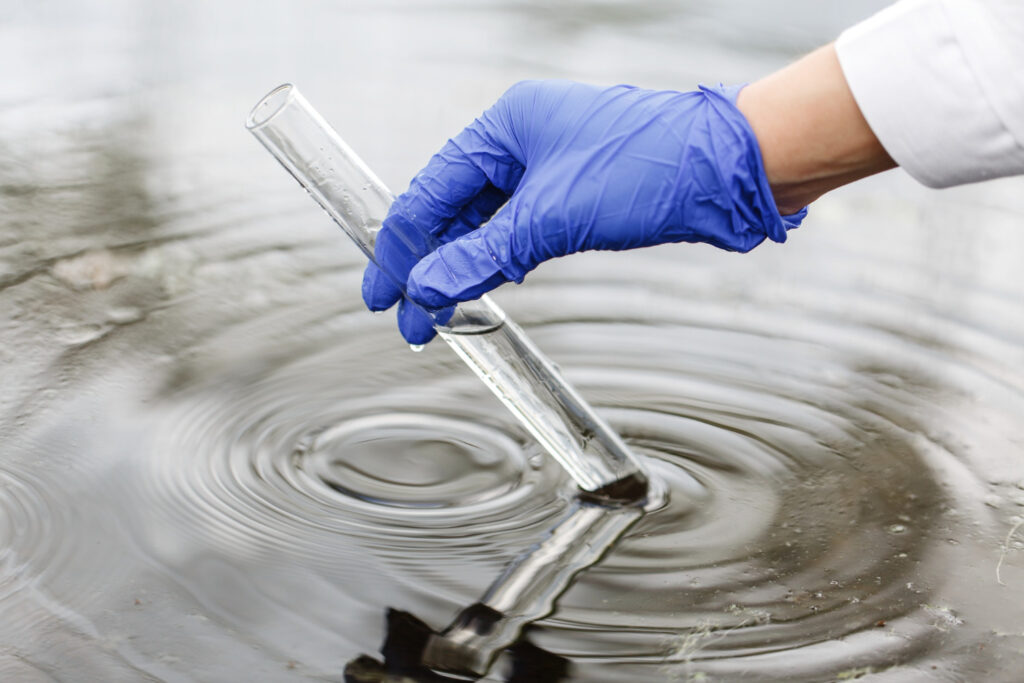
- Conventional water-treatment processes such as coagulation, sedimentation, filtration, and standard activated-carbon filtration are not effective at removing 1,4-dioxane because it is highly soluble and relatively non-adsorptive. This is especially troublesome because public water suppliers have spent years upgrading systems to activated carbon filtration for the removal of PFAS. This costly investment will not work on 1,4 dioxane.
- Proven, more effective treatment technologies include:
- Advanced oxidation processes (AOPs), e.g., combinations of hydrogen peroxide with UV light or ozone, which chemically break down 1,4-dioxane.
- Biological treatment under specialized conditions (bioaugmentation, engineered biological systems) can reduce levels but often requires careful design and monitoring.
- Air stripping and granular activated carbon are generally ineffective or only partly effective at the concentrations of concern.
- Practical implications:
- Utilities that discover 1,4-dioxane in source water often face significant cost and engineering challenges to upgrade treatment to AOPs or other advanced systems.
- Because 1,4-dioxane moves easily in groundwater and resists simple remediation, contaminated source areas may remain an ongoing problem without source controls or long-term advanced treatment.
Federal regulation status and recent federal actions
- No federal Maximum Contaminant Level (MCL) currently exists specifically for 1,4-dioxane under the Safe Drinking Water Act. The EPA’s technical documents have long stated that a federal MCL has not been established.
- However, the EPA has moved aggressively through other authorities:
- Under the Toxic Substances Control Act (TSCA), the EPA completed a risk evaluation and in 2024 issued a revised “unreasonable risk” determination for 1,4-dioxane, finding that the chemical poses unreasonable risks to workers and that drinking-water exposures contribute to risk for the general population. That determination triggers EPA’s requirement to pursue TSCA risk-management steps.
- EPA’s Office of Water and Office of Chemical Safety have coordinated on next steps, and EPA has said it will consider both TSCA actions (to reduce discharges and uses) and Safe Drinking Water Act authorities (which could include developing a federal drinking-water regulation) as part of its response.
- So, while there is not yet a federal MCL, federal action is active and evolving, and EPA has specifically identified 1,4-dioxane as a priority chemical for risk management.
- In the absence of a federal MCL, several states have adopted standards, guidance, or notification levels for 1,4-dioxane, for example, New York has set a groundwater/ambient water quality value of 1.0 µg/L for public-health protection, and other states (including California) publish guidance and laboratory reporting limits for monitoring. This creates a patchwork of protections across the country.
What this means for communities and water utilities
- Detection of 1,4-dioxane in a public water system is serious because:
- It signals a likely upstream source (industrial discharge, wastewater outfall, or legacy contaminant plume).
- Removing or permanently treating the contaminant usually requires capital investment in advanced treatment (AOPs) and ongoing operational costs.
- Without federal MCLs, communities can face uneven protections depending on state rules and local capacity.
The bottom line is that 1,4 Dioxane is the latest manmade chemical capable of causing serious harm that communities are stuck dealing with. As communities evaluate their drinking water systems and regulations develop, the costs of dealing with this pollution should be on the polluters and manufacturers and not on the victims.
Contact Stag Liuzza Today
Is your community’s water supply exposed to 1,4-Dioxane? Are you concerned about the possibility of 1,4-Dioxane contamination? Contact the law firm of Stag Liuzza today at (504) 593-9600 for a free consultation to discuss your rights.