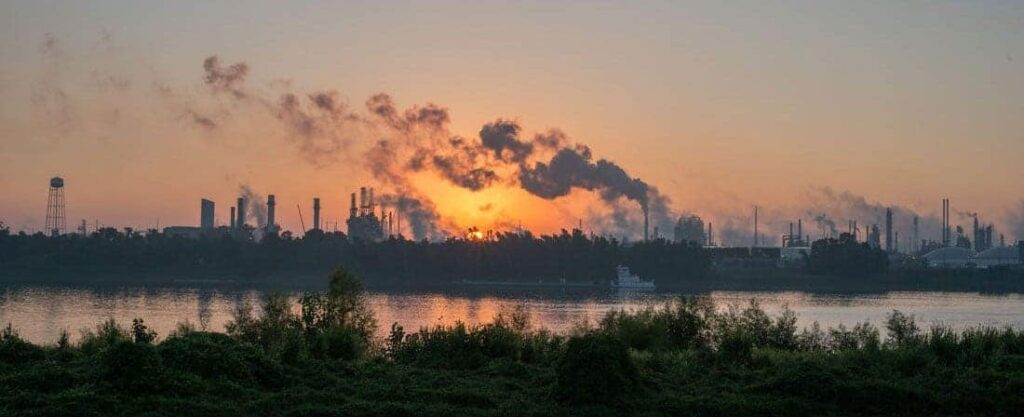
“Cancer Alley” is a term used to describe a stretch of industrial communities along the Mississippi River between Baton Rouge and New Orleans.
This region is home to more than 150 petrochemical plants and refineries. Over time, it has become one of the most widely discussed areas in the United States when it comes to industrial pollution and public health concerns.
For residents, researchers, and policymakers, Cancer Alley represents a complex intersection of economic development, environmental exposure, and long-term health risks.
Where Is Cancer Alley Located?
Cancer Alley refers to an approximately 85-mile corridor along the Mississippi River, primarily between:
- Baton Rouge
- New Orleans
- surrounding parishes such as St. James Parish, St. John the Baptist Parish, and Ascension Parish
These communities sit alongside one of the most heavily industrialized regions in the country.
Many facilities in this area are involved in:
- petrochemical production
- plastics manufacturing
- oil refining
- chemical processing
This concentration of industry has led to long-standing concerns about environmental exposure and air and water quality.
Why Is It Called “Cancer Alley”?
The term “Cancer Alley” emerged from reports and community observations suggesting elevated cancer rates in certain parts of the region.
One of the most widely cited examples comes from St. John the Baptist Parish, where EPA data has indicated some of the highest estimated cancer risks from air pollution in the United States.
Studies and government data have pointed to emissions of hazardous air pollutants such as:
- chloroprene
- benzene
- ethylene oxide
These substances are associated with increased cancer risk over long-term exposure.
What Does the Data Show?
Cancer Alley has been the subject of multiple studies, reports, and regulatory reviews.
Key findings often referenced include:
- EPA risk modeling showing elevated cancer risk in certain census tracts
- concentration of industrial facilities far above national averages
- long-term emissions of hazardous air pollutants
It is important to note that measuring direct causation between exposure and specific health outcomes can be complex. However, the volume of industrial activity and emissions data has made the region a focal point for environmental research and policy discussions.
What Chemicals Are Commonly Found in the Region?
The industrial profile of Cancer Alley includes a wide range of chemicals.
Some of the most discussed include:
- chloroprene (linked to synthetic rubber production)
- benzene (a known carcinogen)
- ethylene oxide (used in sterilization and manufacturing)
- PFAS compounds associated with industrial and chemical processes
Many of these chemicals are persistent in the environment and can affect both air quality and groundwater systems, raising broader concerns about long-term environmental pollution in the region.
When Did “Cancer Alley” Start?
The term “Cancer Alley” began gaining attention in the 1980s, as residents and researchers started raising concerns about cancer rates in communities along the Mississippi River between Baton Rouge and New Orleans. However, the conditions that led to the name developed earlier.
Following World War II, Louisiana experienced rapid industrial expansion, with petrochemical plants and refineries being built throughout the region due to access to the river, transportation infrastructure, and favorable regulations.
Over the decades, this concentration of heavy industry grew significantly, and by the late 20th century, the environmental and public health impacts became a focus of local advocacy, scientific study, and national attention.
How Pollution Can Affect Water and Communities
While Cancer Alley is often discussed in terms of air pollution, water contamination is also a critical issue.
Industrial activity can impact:
- groundwater sources
- municipal water systems
- nearby wetlands and ecosystems
Contaminants may move through soil and water over time, potentially affecting communities beyond the immediate source of pollution. These types of issues are often part of broader water contamination concerns that require long-term monitoring and evaluation.
Why Is Cancer Alley So Dangerous?
Cancer Alley is considered dangerous because of the sheer concentration of industrial facilities and the volume of hazardous emissions released over time.
This region contains one of the highest densities of petrochemical plants in the United States. Many of these facilities emit pollutants that have been linked to increased health risks, particularly with long-term exposure.
Some of the most concerning factors include:
- High levels of hazardous air pollutants such as chloroprene, benzene, and ethylene oxide
- Proximity of industrial sites to residential communities, schools, and public spaces
- Cumulative exposure over decades, rather than isolated incidents
- Environmental persistence of certain chemicals, including those that can affect both air and water
For example, EPA data has shown that certain areas within the corridor, particularly in St. John the Baptist Parish, have some of the highest estimated cancer risks from air pollution in the country.
Another key issue is that exposure is not always limited to one source. Residents may be affected by emissions from multiple facilities at the same time, making it more difficult to isolate causes and fully understand long-term health impacts.
In addition to air pollution, industrial activity can also contribute to groundwater and surface water contamination. These overlapping factors make Cancer Alley a complex environmental issue, often tied to broader patterns of environmental pollution that develop over long periods of time.
Why Cancer Alley Is a National Focus
Cancer Alley is not just a regional issue. It has drawn national and international attention.
The region has been the focus of:
- federal environmental reviews
- civil rights investigations
- academic research
- national media coverage
This attention reflects broader questions about:
- environmental regulation
- industrial zoning
- community health impacts
- long-term exposure risks
The Role of PFAS and Emerging Contaminants
In recent years, attention has expanded beyond traditional pollutants to include emerging contaminants such as PFAS.
These “forever chemicals” are known for their persistence and have been detected in water systems across the United States.
Industrial regions like Cancer Alley are increasingly evaluated for potential PFAS-related contamination, particularly where chemical manufacturing has occurred. These cases are often associated with complex litigation involving multiple parties and long-term environmental impact.
Why Understanding Cancer Alley Matters
Cancer Alley highlights how industrial development and environmental exposure can intersect over time.
For communities, it raises important questions about:
- long-term health risks
- environmental monitoring
- access to clean air and water
- accountability for pollution
For policymakers and legal professionals, it underscores the complexity of environmental cases involving multiple sources, long timelines, and evolving scientific data.
Frequently Asked Questions
Where is Cancer Alley located in Louisiana?
Cancer Alley refers to an industrial corridor along the Mississippi River between Baton Rouge and New Orleans.
Why is Cancer Alley controversial?
The region has a high concentration of petrochemical facilities and has been associated with elevated cancer risk estimates based on environmental data.
What chemicals are linked to Cancer Alley?
Commonly cited chemicals include chloroprene, benzene, ethylene oxide, and certain PFAS compounds.