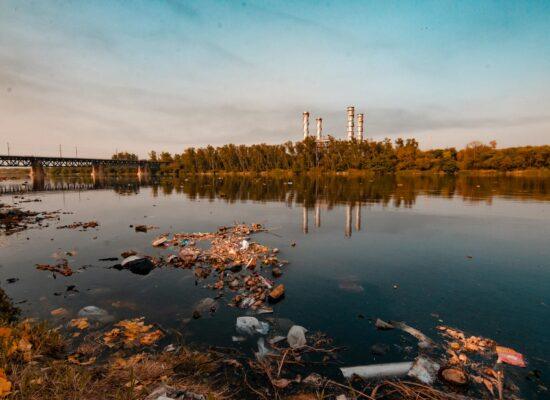
1,4-Dioxane? You’ve probably never heard of it, but you will soon. Municipalities are discovering it in public drinking water, and it’s set to become a costly problem. This manmade chemical has been used for decades in industrial and consumer applications. At the same time, it has infiltrated aquifers, surface-water sources, and public wells.
Because 1,4-Dioxane resists standard treatment methods and has been classified by the United States Environmental Protection Agency (EPA) as a “likely human carcinogen”, communities are facing expensive upgrades, public concern, and potential legal exposure.
What Is 1,4-Dioxane?
1,4-Dioxane is a clear, manmade solvent historically used in manufacturing and as a stabilizer for chlorinated compounds. It is also a byproduct found in certain cleaning agents, cosmetics, detergents and other consumer and industrial applications.
Key facts:
- The EPA classifies 1,4-Dioxane as a “likely human carcinogen.”
- It moves quickly through soil into groundwater and is highly resistant to natural degradation.
- There is no federal maximum contaminant level (MCL) currently enforceable under the Safe Drinking Water Act for 1,4-Dioxane, though advisory levels exist.
- Conventional water-treatment methods (e.g., aeration, standard carbon filtration) typically cannot effectively remove it.
Even at trace levels, long-term exposure poses risk to public health — which means municipalities must treat this as both an environmental and a regulatory/financial challenge.
How 1,4-Dioxane Reaches Public Water Systems
Common Sources
- Legacy industrial discharges: Manufacturing facilities that once used chlorinated solvents or ethoxylated compounds often released waste containing 1,4-Dioxane into unlined lagoons, landfills, or wastewater systems.
- Wastewater effluent: Discharges from municipal or industrial wastewater treatment plants can contain 1,4-Dioxane from industrial or residential sources.
- Consumer products: Some soaps, detergents, cleaning agents, and other household/industrial products can contribute small but cumulative amounts of 1,4-Dioxane to wastewater streams.
Pathways into Drinking Water
Once released, 1,4-Dioxane migrates rapidly through soil into groundwater aquifers — the source of drinking water for many municipal systems. Because it is highly soluble and does not adsorb easily, it can travel long distances and persist for decades.
The Challenge for Municipal Treatment
Traditional treatment plants were not designed to remove 1,4-Dioxane. To achieve safe levels (consistent with the EPA’s risk-based advisory of about 0.35 µg/L) municipalities must invest in advanced oxidation processes (AOPs) — for example, ultraviolet (UV) light combined with hydrogen peroxide or ozone.
For municipalities, this means:
- High capital and operational costs: AOP installations can run into the millions of dollars.
- Increased energy and chemical demand: UV systems, peroxide/ozone consumption, and monitoring add ongoing cost.
- Public communication challenges: Explaining the presence of a carcinogenic compound — even at low concentrations — can erode public trust if mishandled.
- Potential regulatory exposure: States such as New York (with a 1 ppb MCL for certain systems) and North Carolina are increasingly taking action, meaning municipalities may face new compliance burdens.
Some communities have already started to discover the cost of 1,4 Dioxane.
Long Island, New York
Several public water suppliers on Long Island discovered elevated levels of 1,4-Dioxane, in some cases >100 times the EPA’s risk level. Municipalities had to install expensive AOP systems to comply with New York’s 1 ppb standard. Ratepayers faced increased costs, and local utilities explored litigation against manufacturing companies.
North Carolina’s Cape Fear / Haw River Basin
Upstream industrial facilities in the Cities of Asheboro, Greensboro, and Reidsville discharged high levels of 1,4-Dioxane into waterways feeding downstream public systems. The EPA directed the state to act after one downstream utility reported finished-water concentrations reaching extremely high levels (hundreds of times the risk level). Municipalities downstream face significant risk, both financial and regulatory.
Taking Action Against 1,4-Dioxane Polluters
Some municipalities have already started taking action against polluters for 1,4-Dioxane contamination.
Suffolk County Water Authority (SCWA) v. Chemical Manufacturers (Long Island, N.Y.)
- In 2017 the SCWA (serving ~1.2 million residents) sued several chemical-manufacturing companies including Dow Chemical Company, Legacy Vulcan LLC and Vibrantz Corp (formerly Ferro) for manufacturing, promoting and/or selling products containing 1,4-Dioxane that eventually contaminated groundwater used for drinking water.
- The suit alleges that these companies knew or should have known the products would inevitably reach groundwater and render drinking-water wells unusable.
State of New Jersey v. Dow Chemical et al.
- In March 2023 the Office of the Attorney General of New Jersey, the New Jersey DEP and Division of Consumer Affairs filed suit against Dow, Ferro Corporation and Vulcan Materials for violation of environmental and consumer-protection laws by contaminating natural resources with 1,4-Dioxane.
- The complaint alleges the defendants designed, manufactured, marketed and/or sold products containing 1,4-Dioxane, and that their conduct caused contamination of surface and ground waters in New Jersey. NJ.gov
Actions by federal regulators and citizens pose a threat to municipalities that don’t seek to hold polluters liable.
Federal Enforcement Action – EPA Direction to North Carolina
- The EPA issued a directive in January 2025 to the North Carolina Department of Environmental Quality (NCDEQ) to control 1,4-Dioxane pollution from upstream discharges, after identifying downstream drinking-water supplies for nearly 1 million people at risk. Southern Environmental Law Center
- The EPA letter made clear that upstream entities (municipal wastewater plants accepting industrial waste) must be strictly monitored and regulated. This regulatory direction can form the basis for municipalities to hold upstream polluters accountable.
Agreement challenged for allowing pollution – City of Greensboro
- A 2021 legal challenge by the Southern Environmental Law Center asserted that the City of Greensboro’s permit agreement allowed increased discharges of 1,4-Dioxane into a downstream drinking‐water source in violation of the Clean Water Act and state water-quality laws.
- This case underscores that even municipalities may be held accountable (or forced to regulate their industrial/sewer customers) when they allow industrial discharges that pollute water sources.
These examples show that responsibility is being actively pursued: chemical manufacturers are being sued, and regulatory agencies are directing enforcement. For municipalities, this means there is both risk (of being impacted) and opportunity (to seek cost recovery from polluters).
Legal and Financial Implications for Municipalities
Potential Liabilities
Municipalities may bear responsibility for:
- Funding costly treatment upgrades to meet health-based advisory levels or state/regional standards.
- Providing bottled-water or alternate supply during remediation or public-health advisory periods.
- Addressing property-value and reputational impacts if contamination persists and erodes public trust.
Potential Claims / Cost-Recovery
At the same time, municipalities have strong grounds to pursue claims against responsible parties, including:
- Manufacturers and suppliers of 1,4-Dioxane or products containing it.
- Industrial facilities that discharged contaminated wastewater or disposed of solvents improperly.
- Municipalities or utilities upstream that accepted wastewater from industrial customers without proper pretreatment, resulting in contamination of downstream water supplies.
Possible legal avenues include:
- Cost recovery under the federal Superfund statute (CERCLA), if applicable, for cleanup and treatment costs.
- Public nuisance and negligence claims, especially if a municipality can show that a polluter’s actions were foreseeable and avoidable.
- Product liability claims against companies that designed/manufactured products containing 1,4-Dioxane without adequate warnings or safeguards.
Proactive Steps for Municipal Leaders
Municipalities facing potential or confirmed contamination should consider a comprehensive strategy to manage risk and accountability:
- Conduct regular testing for 1,4-Dioxane in source water, finished water, and key wells.
- Document contamination data to establish baselines for potential legal or regulatory claims.
- Engage environmental counsel experienced in groundwater contamination, cost-recovery litigation and municipal exposure.
- Collaborate with neighboring jurisdictions sharing aquifers or watershed boundaries who may share exposure or legal rights.
- Communicate transparently with residents about testing results, regulatory guidance, planned improvements and cost implications.
- Avoid unfunded shifts of costs to ratepayers by exploring upstream cost-recovery or settlement options with responsible parties.
For municipalities, the challenge of 1,4-Dioxane is two-fold: protecting public health and protecting public budgets. The chemical’s persistence, lack of full federal regulation, and treatment complexity make it a long-term management issue but also an opportunity for municipalities to hold polluters accountable rather than simply absorbing the costs.
Cities, towns, water utilities, and citizens should not shoulder the financial burden of cleaning up contamination they did not create. With coordinated testing, transparent communication, strategic legal action, and regulatory vigilance, local governments can secure cleaner water and fair compensation for the costs of protecting it.
Contact Stag Liuzza Today
Is your community’s water supply exposed to 1,4-Dioxane? Are you concerned about the possibility of 1,4-Dioxane contamination? Contact the law firm of Stag Liuzza today at (504) 593-9600 for a free consultation to discuss your rights.