Across the country, municipalities are discovering 1,4-dioxane in public water systems. This emerging contaminant which has been used for decades in industrial manufacturing poses serious challenges for local governments responsible for providing safe drinking water.
We represent municipalities and water authorities seeking to recover the significant costs of detecting, treating, and remediating contamination caused by corporate polluters. We have had great success in getting municipalities funds for dealing with the PFAS crisis. However, 1,4 Dioxane is a different chemical that needs different treatment for removal. Understanding how 1,4-dioxane enters the environment and persists in water systems is the first step toward holding responsible parties accountable.

What Is 1,4-Dioxane?
1,4-Dioxane is a synthetic, colorless liquid used primarily as a solvent and chemical stabilizer. The U.S. Environmental Protection Agency (EPA) classifies it as a likely human carcinogen, and studies have linked exposure to liver and kidney damage as well as an increased risk of cancer.
- Chemical formula: C₄H₈O₂
- EPA classification: Likely human carcinogen
- Solubility: Completely miscible in water
Because 1,4-dioxane dissolves easily and resists natural degradation, it spreads rapidly through groundwater, making it a persistent and costly contaminant for municipalities to address.
Who Manufactures and Uses 1,4-Dioxane?
1,4-Dioxane has been manufactured and used by major chemical companies, including Dow Chemical, Shell Chemical, and BASF, for decades. While its use as a solvent stabilizer has declined, it remains in circulation for industrial and laboratory applications.
Common historical and ongoing uses include:
- Stabilizer for chlorinated solvents (such as trichloroethane)
- Intermediate in the manufacture of other chemicals and pharmaceuticals
- Solvent in paints, adhesives, dyes, and greases
- Byproduct in the production of detergents, shampoos, and cosmetics during the ethoxylation process
Even though consumer product manufacturers do not intentionally add 1,4-dioxane, it appears as an unintentional contaminant in many everyday products. Over time, waste streams from these processes have contributed to widespread environmental contamination.
How 1,4-Dioxane Reaches Municipal Water Systems
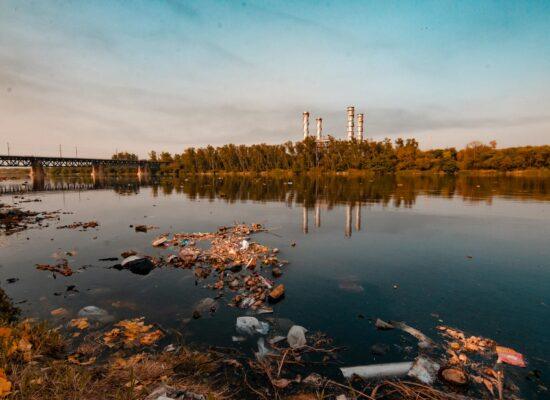
Municipalities often encounter 1,4-dioxane during routine groundwater monitoring or EPA-mandated testing. Common pathways into public water supplies include:
- Industrial wastewater discharges from facilities using or producing 1,4-dioxane
- Leaching from landfills that received contaminated industrial or consumer waste
- Effluent from wastewater treatment plants, which cannot remove the chemical with standard treatment methods
- Historic spills or improper disposal of solvents stabilized with 1,4-dioxane
Because it does not readily adsorb to soil or degrade naturally, 1,4-dioxane travels long distances in groundwater, often reaching municipal wells far from the original source.

Why 1,4-Dioxane Is So Difficult to Remove
Traditional water treatment systems, including activated carbon, aeration, and standard filtration, are ineffective at removing 1,4-dioxane. The chemical’s resistance to biodegradation and volatility makes it one of the most challenging contaminants for municipalities to manage.
The few effective treatment technologies, such as advanced oxidation processes (AOPs) that combine hydrogen peroxide, ozone, and ultraviolet light, are:
- Expensive to install and operate
- Energy-intensive
- Difficult to retrofit into existing treatment infrastructure
For many communities, this means millions of dollars in unbudgeted expenses to meet emerging regulatory standards.
Regulatory Landscape and Emerging Standards
Currently, there is no federal maximum contaminant level (MCL) for 1,4-dioxane in drinking water. However:
- The EPA has classified it as a likely human carcinogen and included it in its Contaminant Candidate List (CCL) and Unregulated Contaminant Monitoring Rule (UCMR) programs.
- Several states, including New York, North Carolina, and Michigan, have established state-level guidance or enforceable limits, often far stricter than federal guidelines.
- The EPA is conducting a risk evaluation under the Toxic Substances Control Act (TSCA), which may lead to future federal regulation.
Municipalities that proactively address 1,4-dioxane contamination will be better positioned to comply with future federal standards and to recover cleanup costs from responsible industries.
Legal Options for Municipalities
Local governments should not bear the financial burden of cleaning up pollution caused by decades of industrial misuse. Municipalities may have claims against:
- Manufacturers that produced or distributed 1,4-dioxane or products containing it
- Industrial operators that released the chemical into soil, groundwater, or wastewater systems
- Waste management companies responsible for improper disposal
Litigation can help municipalities recover costs for:
- Designing and implementing advanced water treatment systems
- Conducting environmental remediation and monitoring
- Addressing regulatory compliance and public communication
Stag Liuzza represents municipalities and water utilities in environmental contamination and cost recovery actions. Our attorneys work with technical experts to identify contamination sources, trace chemical pathways, and hold polluters accountable under state and federal environmental laws. If your municipality has detected 1,4-dioxane in its water supply, you may be entitled to recover treatment and remediation costs from the parties responsible for the contamination. Contact Ashley Liuzza to discuss how our environmental litigation team can assist your community in pursuing cost recovery and ensuring long-term water safety.
Learn More About 1,4-Dioxane
For further technical and regulatory information, visit the U.S. Environmental Protection Agency (EPA):
Contact Stag Liuzza Today
Is your community’s water supply exposed to 1,4-Dioxane? Are you concerned about the possibility of 1,4-Dioxane contamination? Contact the law firm of Stag Liuzza today at (504) 593-9600 for a free consultation to discuss your rights.